

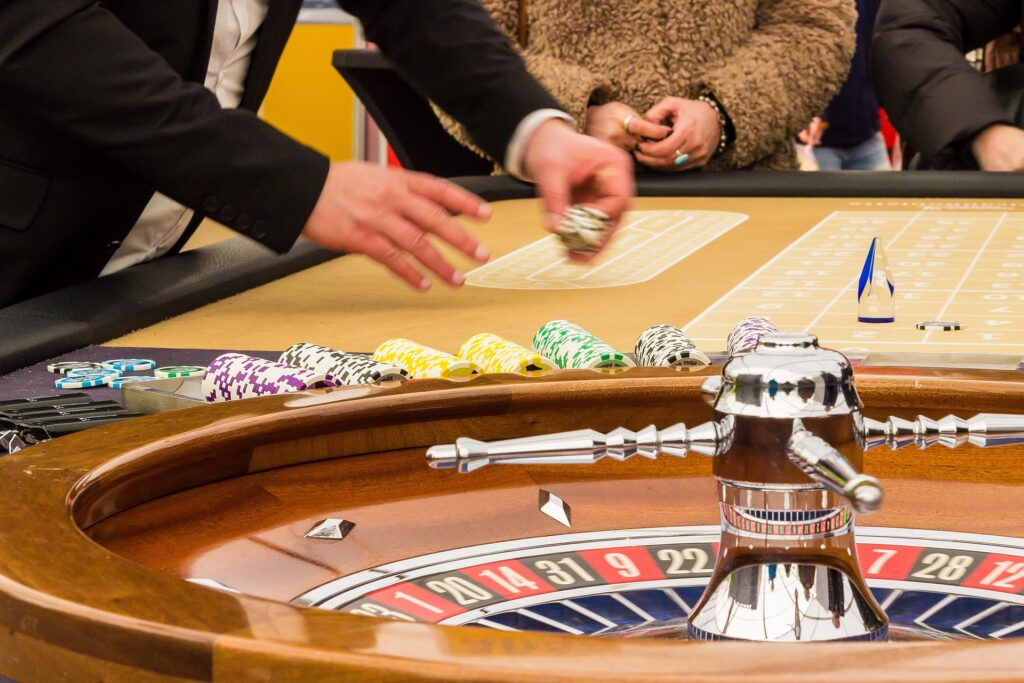
Roulette is one of the few casino games where every outcome, payout, and disadvantage is known in advance. The wheel does not adapt, compensate, or reward patterns. It follows fixed probabilities and fixed payout rules that never change. What does change is how players approach those numbers, often misunderstanding where the real edge lies.
Whether you’re an experienced player who’s heavily versed in called bets and advanced strategies, or a beginner itching to learn the ropes, our guide covers everything, from online roulette types and roulette odds to a detailed guide on how to play roulette in the UK.
What Are the Different Types of Roulette, and Which Has the Best Odds?
The three main types of roulette available at UK-licensed online casinos are American Roulette, European Roulette, and French Roulette. While the layout and presentation may vary slightly, the real differences come down to how many zero pockets are on the wheel and whether any special rules apply.
European Roulette is the closest to the “Classic” roulette, having only one zero pocket and no outstanding rules. American Roulette is almost the same, but has two zeros.
In French Roulette, two special rules apply to even-money bets when the ball lands on zero. La Partage immediately returns half of the original stake, while En Prison places the full bet “in prison” for the next spin, giving the player a chance to recover it if the bet wins. These rules don’t change payout ratios, but they significantly reduce losses over time compared to standard single-zero roulette.
Below is a summary of key features and specs of the most common types of online roulette at UK online casino sites:
| Roulette Variant | House Edge | Number of Zeros | Best Feature |
|---|---|---|---|
| American Roulette | 5.26% | 2 | Available in most UK casinos |
| European | 2.70% | 1 | Well-balanced, beginner-friendly rules |
| French | 1.35% | 1 | Unique En Prison and La Partage rules |
How Do Roulette Payouts and Odds Work?
Roulette table payouts are fixed and entirely determined by how many numbers a bet covers on the wheel. Every wager fits into one of two categories: inside bets, which cover specific numbers or small groups of numbers, and outside bets, which cover broader outcomes such as colours, parity, or ranges. Understanding this distinction is the foundation of learning how to bet in roulette correctly.
The more ground you cover, the lower the payout size will be, and vice versa. For example, if you bet on Red, you’re essentially covering nearly half the table. By contrast, placing a stake on a single number is the riskiest, but potentially most rewarding approach. Gambling on colors, pairs, or columns leads to more frequent but smaller payouts, while betting on numbers and smaller blocks does the opposite.
Consult the table below to learn more about payouts in roulette:
| Bet Type | Numbers Covered | Payout Ratio | European Odds (%) | American Odds (%) |
|---|---|---|---|---|
| Straight Up | 1 | 35:1 | 2.70% | 2.63% |
| Split | 2 | 17:1 | 5.41% | 5.26% |
| Street | 3 | 11:1 | 8.11% | 7.89% |
| Corner | 4 | 8:1 | 10.81% | 10.53% |
| Six Line | 6 | 5:1 | 16.22% | 15.79% |
| Dozen/Column | 12 | 2:1 | 32.43% | 31.58% |
| Even Money (R/B, O/E, H/L) | 18 | 1:1 | 48.65% | 47.37% |
Straight, split, street, corner, and six-line bets are all inside bets, meaning they rely on covering small sections of the wheel. As the number of covered outcomes increases from one to six, the odds of winning improve incrementally, but never enough to change the underlying disadvantage. A straight-up bet has the lowest probability of success, followed by splits and streets, while corner and six-line bets offer comparatively better odds at the cost of reduced payouts. These bets are highly volatile, meaning wins are rarer, but when they land, they return larger multiples of the original stake.
Dozen, column, and even-money bets fall into the outside bet category and are defined by much higher hit frequencies. Even-money bets come closest to a 50% win rate, while dozens and columns cover roughly one-third of the wheel. Despite this, none of these bets offer better odds in a mathematical sense. The house edge remains constant across all bet types within the same roulette variant, meaning that higher win frequency does not translate into better long-term returns. The only factor that meaningfully affects odds is the roulette variant itself, not whether a player chooses inside or outside bets.
Casinos use a simple mathematical formula to calculate the payout ratio for every outcome: 36/n – 1. The “n” stands for the number of positions you covered with your bet. For example, a straight bet (on a single number) has a payout ratio of 35:1. Out of 36 possibilities, you wagered on just one, meaning 36/1 – 1 = 35.
What is the French Roulette Advantage (La Partage and En Prison)?
French Roulette is considered the most pro-player variant, mainly because it uses two unique rules that can give you an advantage: La Partage and En Prison. Without them, there wouldn’t be any meaningful differences between French and European roulette styles.
La Partage is a situational “refund” of sorts. If you place an even-money bet, and the ball lands inside a zero pocket, you may receive a partial refund (usually up to 50% of the original stake). While this isn’t exactly enough to be considered a safety net (since the zero has a hit chance below 3%), it’s a handy protection for long-term play. It’s also worth noting that some French roulette variants may require you to activate the La Partage option manually.
En Prison, on the other hand, is the roulette equivalent of a “free respin” in slots. Your bet remains on the wheel for another round, giving you a second chance of scoring a win. The same bet size is applied to the same position (or positions).
Because of these rules, French Roulette has the lowest house edge among all online roulette variants, sitting as low as 1.35%. Consequently, it offers the best odds in roulette with a theoretical return-to-player score of around 98.65%.
How Do Expert Players Use Advanced “Called Bets”?
If you’re wondering, “How to bet roulette like a pro?” you’ll need to grasp the concept of advanced betting types or “called bets”. The term refers to a feature of French and European Roulette that allows players to wager on predefined sections of the wheel rather than placing individual bets on the table layout. These bets are placed via the racetrack (also called the wheel track), which mirrors the physical order of numbers on the roulette wheel instead of their numerical grid setup.
Unlike columns, odd/evens, or other logical betting arrangements, called bets target neighbouring sections of the wheel. They typically focus on popular areas, many of which are near or directly opposite the zero pocket.
It’s important to understand that called bets don’t necessarily cover the best odds on roulette wheels. They don’t have any impact on RTP, payout rates, or the house edge. They allow you to quickly cover various seemingly unrelated pockets with a few taps, which can be particularly handy if you’re only given 20-30 seconds to place your stakes.
Below, we’ll cover some of the most popular types of advanced roulette bets.
Voisins du Zéro
Voisins du Zéro is a series bet comprised of several standalone split, corner, and street bets. All wagers are supposed to be placed on the numbers that encircle the zero and the zero pocket itself. These numbers include 22, 18, 29, 7, 28, 12, 35, 3, and 26 on one side, and 32, 15, 19, 4, 21, 2, and 25 on the other.
This advanced bet is sometimes called the 0-2-3 Serie, because the “Street” comprises 0, 2, and 3 as the leading numbers backed by 2 to 3 betting units, each. A single betting unit is placed on splits comprised of 4 and 7, 12 and 15, 18 and 21, 19 and 22, and 32 and 35. To wrap up, two betting units are placed on the corners of 25, 26, 28, and 29.
The main street has the highest risk-reward ratio, usually allowing you to bag 15x of your bet at a chance of 8.10%. The five splits give you better coverage with 27.03% odds to win 9x of your stake. The corner offers a similar payout, with a theoretical hit chance of 10.81%.
When played on French or European Roulette wheels, this setup will give you approximately 45.95% of winning (since 17 out of 37 outcomes are covered).
Tiers du Cylindre
This advanced bet covers roughly a third of the roulette wheel (12 numbers). The positions look like a cylinder from a top-down view, covering numbers 5, 8, 11, 10, 13, 16, 23, 24, 27, 30, 33, and 35. Although you could back each number with a standalone bet, many gamblers prefer splitting them in pairs. In such cases, this bet has about 32.43% odds of winning.
Tiers du Cylindre is a highly aggressive, risky type of multi-bet. It is often compared to dozens or columns in terms of coverage, but differs in execution by following the wheel’s physical order rather than the table grid. It appeals to players who prefer moderate coverage without relying on even-money outcomes.
Orphelins
Orphelins, which directly translates to “Orphans” from French, is another high-risk, high-reward multi-bet that’s primarily used by highly experienced players. It targets numbers that fall outside the main wheel sectors covered by Voisins and Tiers, focusing on more isolated positions spread across two smaller sections. This bet covers eight numbers, including 1, 6, 9, 14, 17, 20, 31, and 34. While number 1 should be covered by a straight-up bet, the rest should be placed as splits.
With Orphelins, the maths is straightforward: you’re covering 8 out of 37 possible outcomes on a French/European wheel, which gives you a theoretical hit chance of 21.62%. If the ball lands on 1, the straight-up bet pays 35:1, while most other winning outcomes pay at split odds of 17:1, depending on how the underlying splits are structured.
Jeu Zéro
Jeu Zéro, often referred to as the “Zero Game” bet, is an advanced bet that targets seven numbers closest to the zero pocket – 3, 12, 15, 26, 32, and 35, as well as the actual zero. While you may see a shortcut for this advanced bet on some wheels in land-based casinos, it’s dominantly found at some variants of French roulette wheels in online formats.
In most cases, a straight-up bet is to be placed on the number 26, while the remaining six should be covered as split bets.
One of its practical advantages is execution speed: the bet is made up of only four placements, all clustered near zero, making it quicker to place than broader called bets like Voisins du Zéro, while still maintaining a focused wheel-based structure.
Do Roulette Betting Strategies Actually Work?
Betting strategies are often associated with roulette because the game gives players full control over every wager. Unlike blackjack or baccarat, where your choices mostly boil down to tactical in-game decisions or pure predictions, roulette gives you plenty of unique betting types to mix and match into a perfect strategy.
Most roulette betting systems revolve around bankroll progression rather than prediction. Strategies such as Martingale, Fibonacci, and D’Alembert don’t attempt to change the odds of the game. Instead, they use your bankroll as a tool to either recover losses, smooth volatility, or capitalise on short winning streaks. Some approaches prioritise aggressive recovery, others aim to limit risk, while a few sit somewhere in between. What they all have in common is that they assume the player can continue adjusting bet sizes indefinitely.
In practise, this assumption runs into a hard limit. All live dealer roulette games operate with fixed minimum and maximum table limits, which create what’s commonly known as the table limit trap. As bets increase during a losing streak, players eventually reach a point where they can no longer increase their stake, forcing a reset regardless of whether the system has “completed its cycle.” Even though gambling systems won’t give you a guaranteed edge on the best odds for roulette, knowing how they work may inspire your strategy.
Martingale
The Martingale system is built around aggressive progression. After every losing bet, the stake is doubled, with the assumption that a single win will recover all previous losses and produce a small net profit. Once a win occurs, the bet size is reset to the original unit.
In roulette, Martingale is most commonly applied to even-money outside bets, where win probabilities are close to 50%.
Using it on straight-up bets or advanced inside wagers dramatically increases risk, as longer losing streaks are statistically more common. While the system can produce short winning runs, it also causes bet sizes to escalate rapidly, making it highly vulnerable to table limits and bankroll exhaustion.
Fibonacci
The Fibonacci strategy is a negative progression system based on the Fibonacci sequence, where each number is the sum of the two preceding ones (1, 1, 2, 3, 5, 8, and so on). In roulette, the system increases bet sizes gradually after losses and steps back in the sequence after wins, rather than resetting completely.
Similar to Martingale, Fibonacci works well with even-money outside bets and is rarely used with advanced bets. Even though it’s not as aggressive as the Martingale system, the Fibonacci Strategy tends to hit the wagering limit faster since you’re not resetting your betting units.
D’Alembert
Although it’s not exactly a beginner-friendly system, the D’Alembert strategy is slightly easier to implement in live dealer roulette games. It uses linear progression rather than exponential jumps. Instead of doubling stakes after a loss, the bet size increases by a single unit. After a win, the stake is reduced by one unit. The goal isn’t to erase losses instantly, but to stabilise swings and recover over multiple outcomes.
In practical terms, the system moves slowly. If a player begins with a £1 unit and loses, the next wager becomes £2. Another loss pushes the stake to £3. A win at that point returns £3, offsetting part of the previous losses rather than clearing them outright. From there, the stake drops back to £2, and the sequence continues. Over short runs, a couple of wins following a losing streak can narrow the gap without forcing sharp increases in bet size, but it’s still vulnerable to the table limit trap and may not work without a sizeable bankroll.
What are the Key Differences Between Live Dealer and RNG Roulette?
Online roulette games are either designed as automated RNG-driven games or live-streamed games played in real time (live dealer roulette). Both formats are largely built on standard roulette rules and mechanics, but they’re far apart in every other aspect.
RNG Roulette
Automated roulette table games use pseudorandom number generators to emulate random outcomes. The ball, the wheel, and every other feature are simulations – the number is actually chosen when you press the “Play” button. That takes a bit of realism away, but there are numerous notable upsides:
- Most RNG roulette games have no timers
- Betting limits tend to range from low to medium (€0.10 to €200)
- Small differences between variants (first-person, classic American, classic French) make the learning curve more manageable
- No pressure from other players
Live Dealer Roulette
Live dealer roulette is rooted in real-life gaming. Even though you’re not physically sitting at the roulette table, real humans will operate the mechanics from start to finish; real players may participate and place their own bets, and you’ll usually be able to talk to them via the in-game chat. Standard roulette props, from the wheel and balls to the studio the game is played in, are real:
- Physical randomisation is the same as in land-based casinos
- You can talk to other players and send the operator (dealer) messages
- Numerous variations, such as XXXtreme Lightning Roulette, Double Ball Roulette, Gold Vault Roulette, and Speed Roulette, are available in UK online casinos
- Betting ranges are more flexible than in RNG roulette
- Timed rounds offer a more dynamic gaming environment
How Can UK Players Gamble Responsibly and Safely?
The only sensible answer to the question of “how do you bet on roulette” is by doing so within clear, predefined limits. All UK-licensed casinos operate under Gambling Commission rules and are connected to GAMSTOP, giving players access to tools such as deposit limits, loss limits, time-outs, and full self-exclusion. These controls are designed to reduce impulsive play and make bankroll management easier.
UK regulation also places direct restrictions on game design. As of January 2025, auto-play and accelerated spin features such as turbo or quick spins are no longer permitted in online casino games. By requiring manual input for every spin, these rules slow down play and prevent rapid, unconscious betting cycles that can escalate losses quickly.
In addition, UK casinos must follow a no-reverse withdrawals policy, which came into effect in May 2020. This means that once a withdrawal is requested, funds cannot be pulled back into play. This removes a common problem where players chase losses after initially deciding to cash out.
Conclusion: Mastering the Wheel
Roulette is a game with fixed rules, fixed payouts, and clearly defined odds. Choosing French or European roulette over American immediately lowers the house edge. Understanding the odds and roulette payout rules explains why some bets win more often, others pay more, and none of them offer a long-term advantage.
Strategies don’t change the math behind the scenes. At best, they provide structure and help manage bankroll swings; at worst, they push stakes beyond sensible limits. Used responsibly, they can slow the game down and impose discipline.
With this guide, you’ll have what it takes to play roulette like a professional. Keep learning, play demos whenever you feel unsure, and remember to play safely and within your limits.