

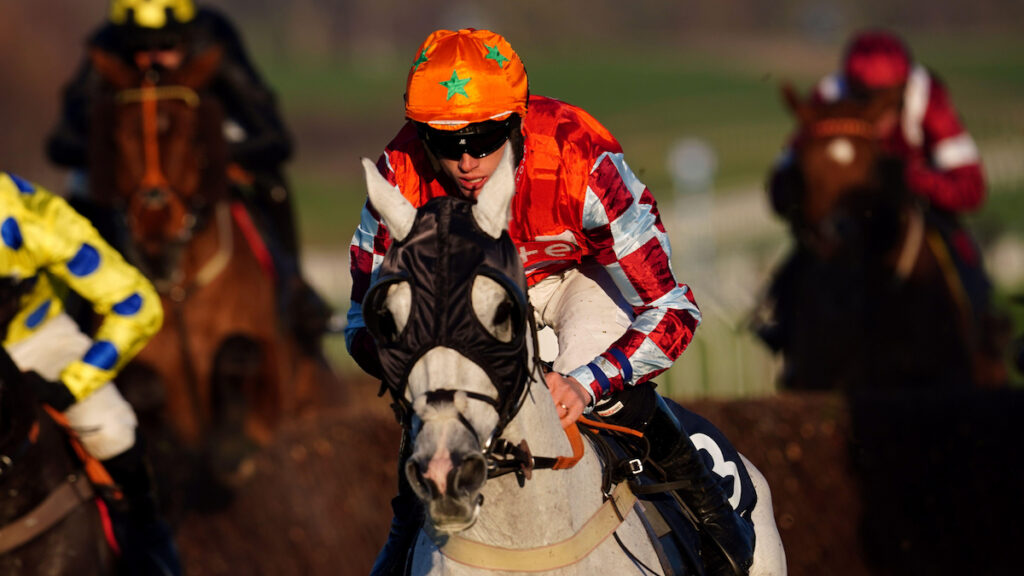
Alan Johns has charisma.
It has ensured that in his post-riding career, Johns has developed more than just a cult following. He engages on social media, writes comedy skits for his fellow riders to appear in, and regularly attempts to see the funny side of his own career, as well as the sport of horse racing as a whole. His finger is on the pulse of current trends.
Alan Johns is also serious about his career both on and off the course. With his flourishing media career well underway, there is time first to speak of what he achieved in the saddle.
“I had a sustained career where I reached a certain level. I’d love to have had more success than I did have,” Johns recalls. It is a measure of his humility that he was encouraged to brag about his 223 winners, far from an insignificant number, but still chose to imagine how he could have gone one step further.
“Each step of the way is a notch along the road. So turning professional in the first instance, you’ve got to be of a certain standard. Riding out my claim was something I was very proud of, as well as little things like riding your first double and certainly having a Cheltenham winner. It is in my nature to self-deprecate, but I look back on my career with a sense of pride that I turned myself into a professional jockey who stuck at it for a while.
“You learn to have certain traits like discipline, wanting to improve, turning up every day, just trying to be a decent person and professional. I’m certainly pleased with how I carried myself throughout my career.”
“It is in my nature to self-deprecate, but I look back on my career with a sense of pride.”
Those traits have certainly remained in the 18 months since his retirement as a jockey. It is clear to see from his media output, but also in how much he remembers about his achievements. He remembers which track he enjoyed his most winners at (Ffos Las), his best course strike rate (Newcastle), the two courses at which winners cruelly eluded him (Cartmel and Kelso), and the trainers, beyond the “brilliant to ride for” Tim Vaughan, who helped him past a double century of successes.
His Ffos Las record is evidence of the ups and downs of a jockey: “it took me ages to ride a winner at Ffos Las. For a long, long time, it was my least successful track. Tim Vaughan, he’d sometimes send the horses with a lesser chance to the most local racecourse. So I felt like I didn’t have any luck there for a long time. Then in the end, I had plenty of success there, a few doubles and a flurry of winners. It was the place of my final winner as well. I genuinely loved riding there. On the other side, at one stage, I basically had a winner at Newcastle on every trip!”
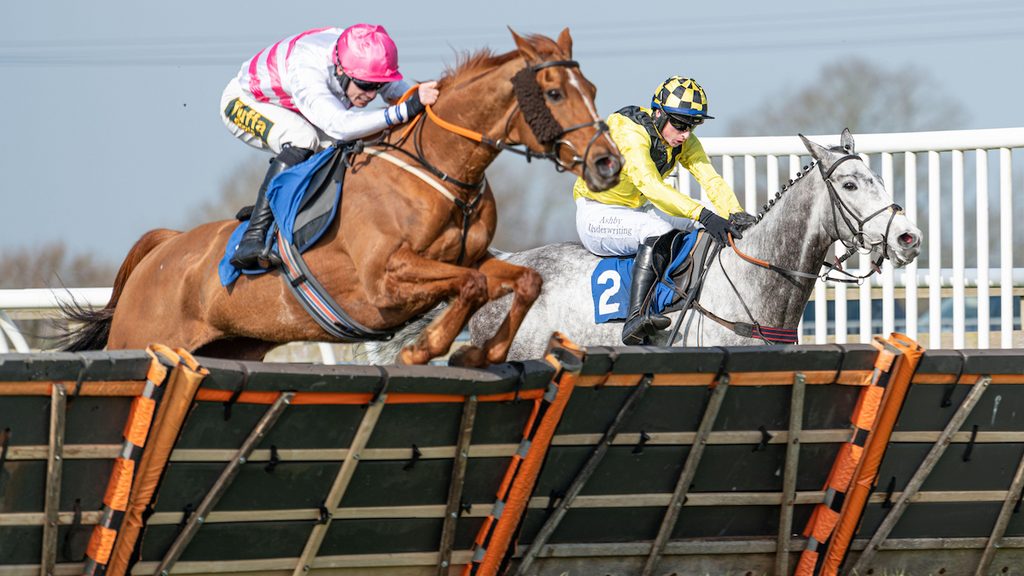
The most trusty commander aside from Vaughan was Victor Dartnall, who Johns cannot hide his fondness for.
“What a hero of a man! He was obviously in his latter years of training at that point, but I just love riding for him. I picked up my favourite spare ride for him through Ian Popham, my agent. He got me on a horse called Admiral’s Secret, who refused to race a couple of times, then I happened to get on him and he decided he was happy racing again! He’d always get ponied to the start, which was even more unusual because the horse Victor always sent was not the best behaved. I think every time I took him to the start with a pony, I gave the pony a lead.”
Unlike Admiral’s Secret and his sitcom pony, there is nothing ungenuine about the weighing room’s camaraderie. It may be an unusual setting with all the combatants in one space, but the sense of unity pervades even the biggest races.
“Don’t get me wrong, there’s stories over the years of bust ups and people scrapping,” Johns opens, hinting that these are still fierce competitors first. “But the vast majority of the time it’s remarkably smooth. Jockeys actually work together a lot of the time. You go as a pack and as much as you’re trying to beat those around you, you also work as a team to get to a certain point in a race. Say if no one wants to make the running, or if you’re on a group of inexperienced horses in a juvenile race, you might have two that concede to go ahead even if they’ve instructions not to. I think jump racing is a humbling sport where you’re never far away from a fall or you can have the most unbelievable day, then end up on your backside in the next race. The very nature of the sport does tend to bring arrogance to a minimum.
“Look at someone like Sean Bowen, he’s literally riding in six races a day, seven days a week. If he was so locked in all the time, he would just not be capable of having a conversation with anyone, would he?”
“Jockeys actually work together a lot of the time. You go as a pack.”
Sean and his brother James currently entrust Johns with their social media, so he has an inside line on the current Champion Jockey. Maybe they are not driven 2/7 to distraction, but there must be something which gives the pair an edge?
“No, they’re both absolute nightmares!” he deadpans. “Obviously they’re brilliant. I feel Sean has taken his riding to another level because he thinks that “if my horse is the fastest horse in the race, it’ll win.” It allows him to ride with such freedom and be out of his ground if he thinks the pace is too strong.
“Someone who’s really worried about keeping their owner or the trainer happy will be inclined to force their horse too fast, or sit off too slow a gallop. Whereas Sean and James, both of them, will say “I think I’m doing the right thing for the horse. If you don’t like it, then use someone else.” I think that’s one of their greatest strengths.”
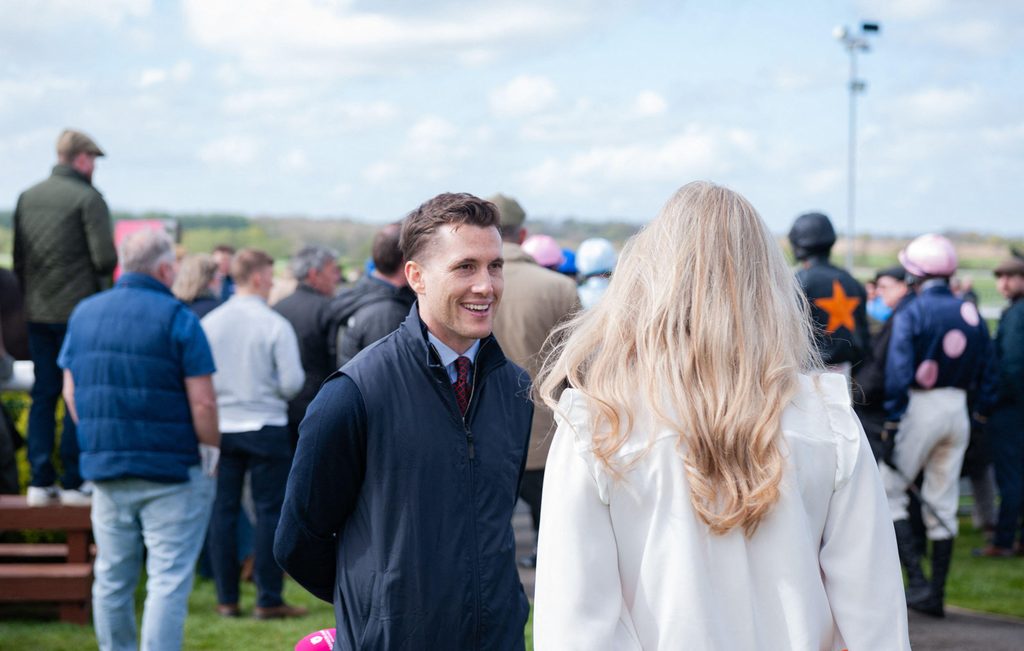
While Johns would undoubtedly admit that their strengths surpassed his in the saddle, his own strength of personality has shone through since that final Ffos Las winner. Yet, his media career was not something he had ever planned.
“I didn’t really know what I wanted to do when I grew up, and even while I was a jockey, I saw that as a stop gap because I wasn’t riding in the top echelons. About 18 months before I finished riding, I started doing a couple of things that were media-facing. I helped organise the Welsh jump jockeys’ Flat race that was for charity to raise money for Christian Williams‘ daughter. I helped bring together a promotional video where the jockeys were acting tongue-in-cheek, saying how much they wanted to beat each other. That felt like quite a big jump at the time. I’d scripted it, having them saying silly things, and it was very done deadpan. I was wondering, are the jockeys going to buy into this? The filming went great, though, and they had Equine Productions there and proper camera crew. That side of it went brilliantly.
“At the same time, I started doing a series for the Jockey Club on social media, which was basically a recap of the past week. And that followed on from riding in the Grand National that year. I decided around that time to start having some fun in interviews, just trying to amuse myself! That brought out the class clown in me that I had in school time that had been sat dormant.”
There is nobody in racing doing it like Johns on social media. However, he is keen not to be received as a one-trick pony, even though everyone should be encouraged to check out some of his recent Instagram posts (GTA Ascot anyone?).
“I like trying to make something that’s amusing to people, but also conscious that I want to speak with a modicum of intelligence. Plenty of people have employed me and said they wanted me to do it because they wanted something lighthearted. Sometimes I’ve struggled getting into straight broadcasting; if Rachel Blackmore, for example, wanted to work for ITV racing, I’m sure she could pick up the phone and they’d have her on tomorrow. She’s earned that right, and so why would they want to hear from me on the topic?”
““I like trying to make something that’s amusing, but also to speak with a modicum of intelligence.”
That rhetorical question does not come from a lack of confidence or insight, however. If that position is not his yet, much like in a big-field handicap, Johns knows what he has to do to put himself in the best position.
“I’m proactively trying to tweet more racing thoughts and put some more unplanned videos where I analyse a race or a situation. I’ll keep striving to create. Being proactive has definitely yielded results in my new vocation.”
With that in mind, Johns puts his pundit hat on to finish: we want two predictions for the rest of the jumps season, one likely and one unlikely.
“I think Jordans will win the Grand National. Joseph O’Brien will get him there spot on. I think he’s going to run over hurdles and the target has been announced, which just tells all for me.
“I tweeted yesterday, I think Dan Skelton will get to 300 winners. I think he might keep pushing to set a target that will never be reached again. We are on the cusp of the calendar changing, so that maybe it will be impossible to reach, let alone unlikely. If he keeps going at his current trajectory, which is 30 a month and more, then he will get there on his current numbers.”
Those opinions, outlandish or otherwise, are argued eloquently. Johns is not ITV Racing’s own just yet, but the way he presents would fit the TV screen well. For now, though, he is happy expressing his character, and elevating his voice when it suits.
“I think most people have different aspects to their personality that comes out at different times. I quite like serious conversation as well!
“The good news for now is, I’ve always been someone who’s enjoyed trying to make people laugh.”